

Eagle Cave: discover an underground karst landscape and that is unique in central’ Spain. The limestone rock is hidden by the oak forest that covers the hill which makes the underground landscape we are going to discover even more surprising
It’s discovery occurred unintentionally on the afternoon of the 24th of December 1963, when five kids wandering the hill known as Cerro Romperropas or Cerro del Aguila (Hill of the Eagle in English) were surprised to see steam coming out of a hole. The steam was produced by the difference in temperature in the cave, about 17ºC and the cold weather outside.
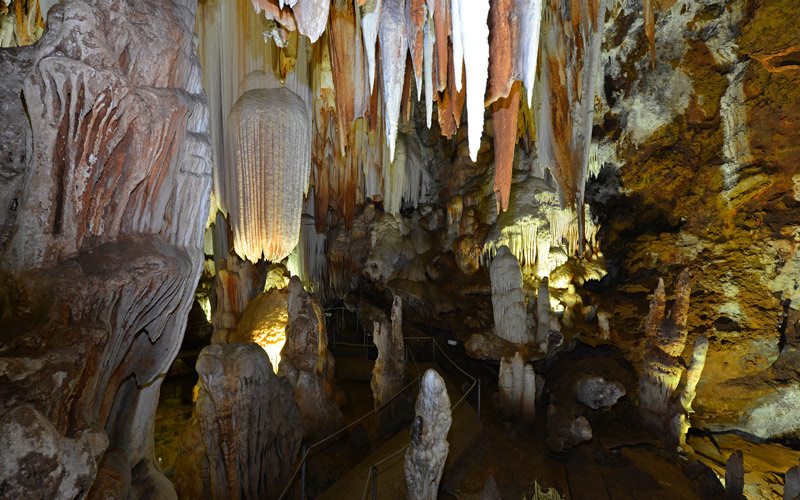
Helped by ropes and lanterns, the boys ventured into what appeared to be an animal’s hole, just 60cm in diameter. They descended for a while and crawled through about 50 to 60 meters until they reached the great main gallery. Afterwards they were lost inside the cave for almost 5 hours, until they finally found the hole they came in from.
Then came everything else, giving the news of the great discovery to the authorities, the owners of the farm, experts…etc.
After hard work of conditioning and since July 18th 1964, Cuevas del Aguila (Eagle’ Cave) open to the public every day of the year.
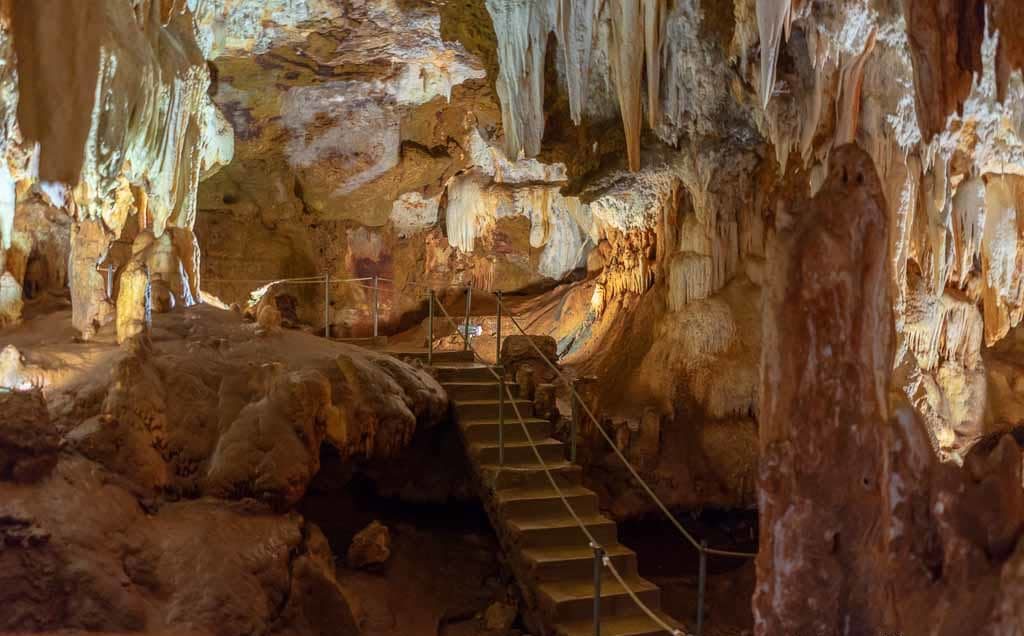
The cave’s formation is composed of paleozoic limestone attributed to the lower Cambrian. What does that mean? That they were formed between 500 and 550 million years ago, when invertebrates like the trilobites were dominant animal species on earth
¿Te gustó el post? Si quieres mantenerte al día de nuestros contenidos… ¡Apúntate a nuestra Newsletter mensual!