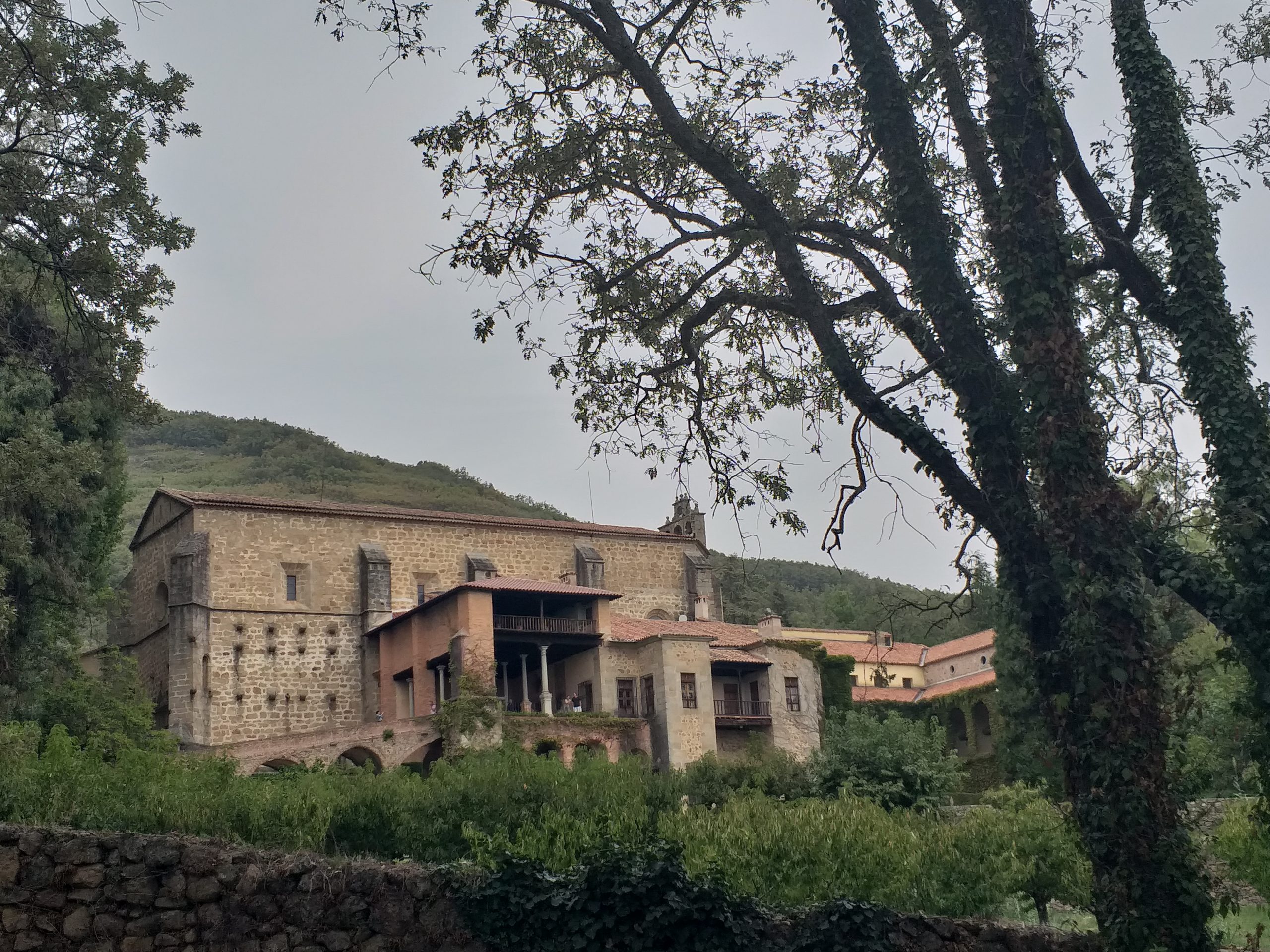
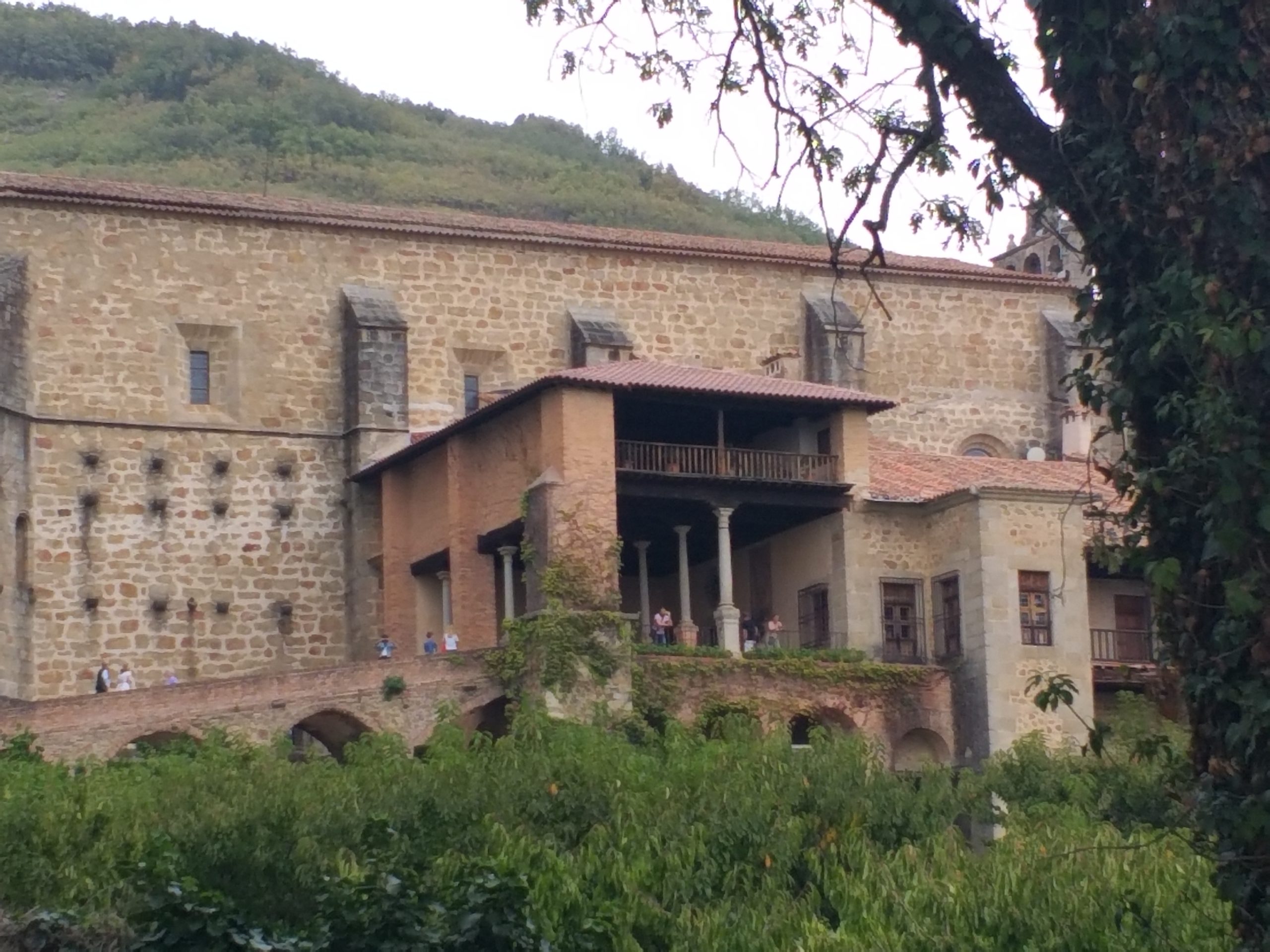
Monastery of Yuste: A pik on Spanish’ History. Nestled in the hills around Cuacos de Yuste, it was a small Jeronimos’ monastery when it was built around 1402.
Around 1556 Charles I of Spain and V of the Sacred German Empire sent a letter to the prior asking him to execute the plans of a small palace, rather a country house for an emperor, for what he had designated a member of his court for him to take care of the financing, because he had the intention of retiring there.
Before that, the Emperor had sent two emissaries to the area (Extremadura and Andalusia) to find the ideal place for his retirement. His Chief Steward and mate in wars and fatigues, the Duque of Alba, had a palace in Plasencia where Carlos I had been a number of times.
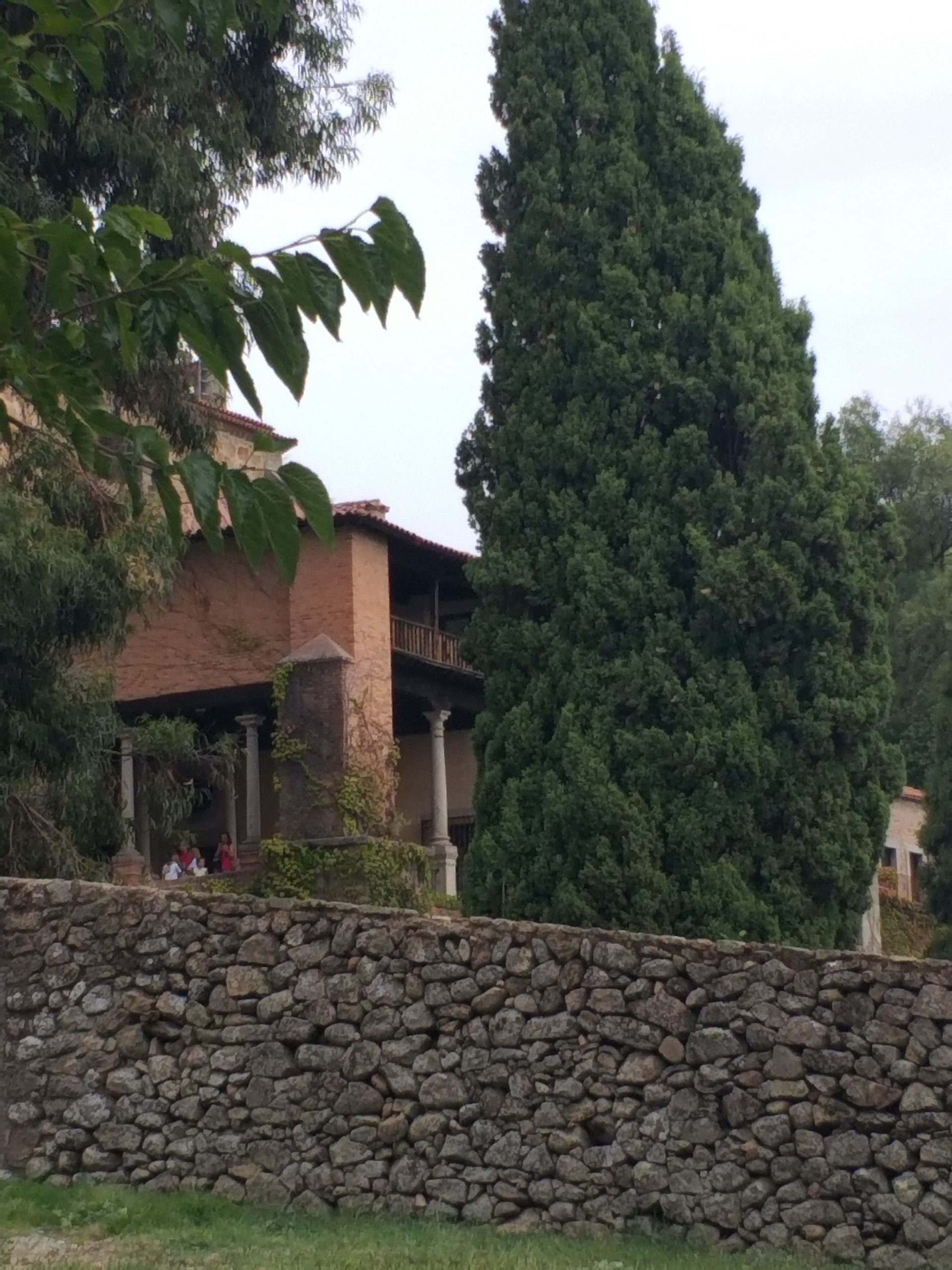
The weather of the area, the abundant game and fertile soils, and the fact that the isolated monastery belonged to the Jeronimos, a Spanish monks order to whom the Emperor sympathized more than with Jesuits, were amongst the reasons that made him choose this place.
Months before arriving to the Monastery, whilst there were ended the refurbishment works that suffered some delays due to some complaints from the monks and some financial problems, Charles I lived on what is today the Parador Nacional de Jarandilla, by the time the castle-palace of the Counts of Oropesa.
The first Spanish king who ruled over most of Europe, a Spain free from the Moorish invasion and a continent in continues growth – America – arrived there already exhausted and in big pain because of the gout, having abdicated in both his son Felipe II and in his brother Fernando for the German part of his Empire.
It was in Yuste where the Emperor met one of his natural son, called Jeronimo but who was historically known as Juan de Austria and he then commanded him on his sons Felipe II court.
It was in his bed in Yuste, dressed in black velvet since the death of his wife, empress Isabel, died some years before and for whom he always mourned, where the emperor, almost two years after his arrival, got to the end, leaving us a pik on Spanish History to take care of.
¿Te gustó el post? Si quieres mantenerte al día de nuestros contenidos… ¡Apúntate a nuestra Newsletter mensual!